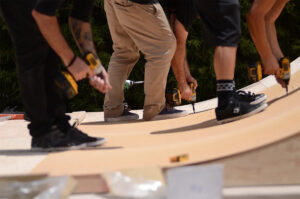
There is a golden rule in DIY spot building: “It’s easier to ask for forgiveness than permission.” But it’s even easier if nobody ever sees you do it. Building a sustainable DIY spot isn’t just about the labor; it’s about the logistics of invisibility.
The Golden Ratio If you are mixing quick-crete for a transition or a slappy curb, the standard bag mix is often too rocky for a smooth grind. The secret is the “finisher’s touch.” Add a distinct layer of pure Portland cement and sand to the top 1/2 inch of your pour. It cures harder and slides faster than the standard gravel aggregate found in the cheap bags at the hardware store.
The Cure Time Myth Most people get busted because they skate it too soon. Concrete generates heat as it cures. If the spot feels warm to the touch, it’s still green. Skating green concrete creates micro-fractures that will eventually turn your smooth quarterpipe into a pile of gravel after one winter freeze. Patience is the only way to beat the elements.
Rub Bricking: The Lost Art Don’t rely on your trucks to break in the coping. Bring a rub brick (carborundum stone) and a bucket of water. Scrubbing the coping line while the concrete is “leather hard” (about 2-3 hours after pouring) exposes the aggregate just enough to lock in your grinds without eating your urethane.
Conclusion Build it fast, let it cure slow, and keep your mouth shut. The best spots in the city aren’t on Google Maps—and we intend to keep it that way.